
Construction projects today can be carried out using two different methodologies (traditional and BIM). The traditional methodology is largely unchanged since its beginnings, apart from some adjustments as technology has evolved. Each specialized field works more or less independently on a project, with some basic cooperation between them. Once the project has been drawn up, building work begins, normally carried out by a construction company that will have to study the project, as it was not involved in preparing it.
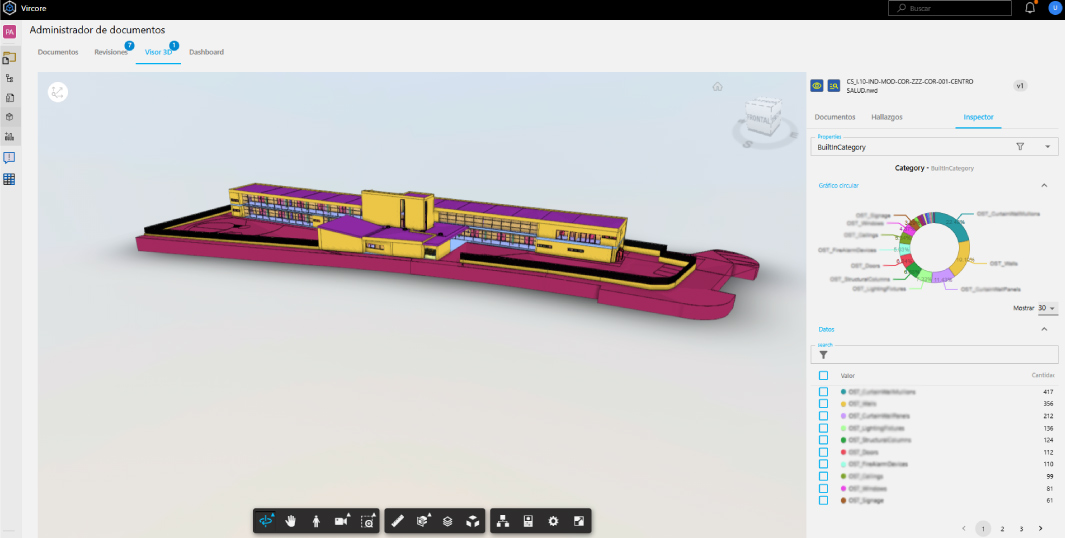
The BIM (Building Information Modelling) methodology is a new system for developing projects, where all the participants begin to work collaboratively at an early stage, using a single parameterized virtual 3D model, i.e., one where the data associated with every element within the model is held in a database. This allows measurements and budgets to be obtained more quickly and accurately, while making it possible to manage infrastructures throughout their entire life cycle, from design to demolition.
When all the parties involved work together, it reduces the issues that can occur when disciplines overlap (interference), leading to problems later in the construction phase. Furthermore, when an issue is detected, the BIM methodology makes it easier to find a solution, reducing the costs associated with such incidents compared with traditional ways of working.
The BIM methodology offers many possibilities, therefore, including: saving time drawing up plans; helping to plan construction processes; producing 4D virtual simulations of the construction process; linking plans to the 3D model; detecting potential dynamic and static interference, which can be corrected before real construction work begins; and improving the design. Because there is interoperability between the different software programs used, the methodology also allows various types of simulations to be run (energy, routes and traffic flows, evacuation, fires, etc.). It can also be used as a marketing tool, as it can generate virtual presentations of the finished structure before construction work begins to be included in infographics, renders and promotional videos.
Having briefly described the BIM methodology and its potential, we should point out that it calls for a 3D model linked to a database and software that can handle these. A wide range of software houses have been developing and marketing BIM programs for a long time. There is, therefore, no single BIM package and the choice of software will depend fundamentally on the needs of the project and the users' knowledge of each program.
BIM software does have limitations with regard to the many processes to be carried out relating to a project drawn up using it. However, other programs exist that can be used interoperably with BIM software to work around these limitations. For example, for plumbing, there are programs that allow the precise calculation of the pipe network. Once completed, it communicates with the BIM software to update the network. There are similar programs for calculating structures, energy, etc.
BIM methodology is not, therefore, a specific piece of software but a system for working that requires appropriate IT tools. It is being used more and more, largely thanks to European Parliament Directive 2014/24/EU, which urges member countries to implement it in public financing projects. in Spain, the Ministry of Public Works made this methodology mandatory for public building tenders from December 2018 and in public tenders for infrastructures from July 2019.
For more information about INGECID’s BIM services click here
 INGECID meets with Westinghouse, a world leader in nuclear technology
/ Extensive experience across multiple sectors